
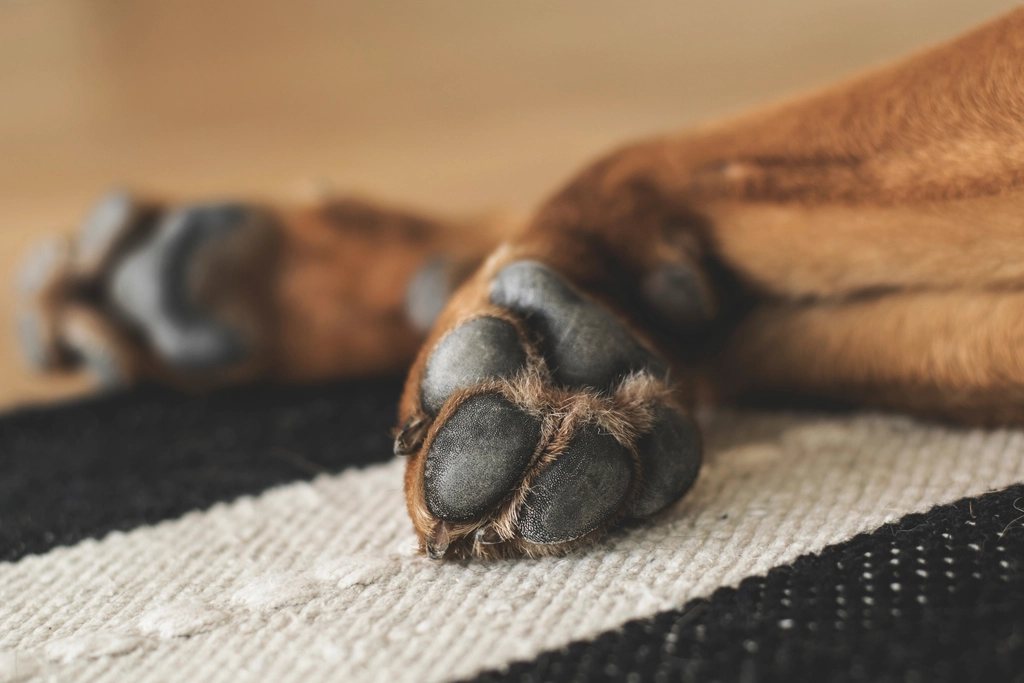
A dog’s paw pad is a remarkable piece of engineering: a thick layer of keratinised skin over a cushion of fat and connective tissue, with sweat glands in the surface and a blood supply that helps regulate temperature. It can take rough ground for hours, but it was never designed for sun-baked slab, crusty spring snow or the chemical grit spread on winter roads. Most of the paw problems we see on the trail come from one of those three surfaces, and most are avoidable with a few habits. This is our approach to pad care across the seasons.
How pads toughen and how they fail
Pads adapt to use. A dog that walks on gravel, rock and dry ground every day builds thicker, harder pads; a dog that spends its week on carpet and grass has soft pads that abrade quickly on the first rocky day out. The conditioning is real, but it takes weeks, and it happens through gradual exposure, not one long punishing walk. When pads fail, they do so in predictable ways: abrasion wears the surface thin and leaves a raw, pink patch, usually on the front paws, which carry about sixty percent of a dog’s weight; cuts come from sharp rock, broken glass or ice; and burns from hot ground blister and then peel. A dog that has started to limp, lick a paw or refuse to keep walking is usually telling you about one of these.
Rock and scree
Granite, quartzite and volcanic rock are abrasive, and long descents on them act like sandpaper. Hot rock adds the burn risk, so on summer routes we do the hand test, seven seconds on the surface with the back of the hand, before any long stretch of slab. On scree and talus the danger is different: toes slip between stones, nails catch and tear, and a dog moving fast can slice a pad on an edge. We keep the dog close on scree and let it pick its own line rather than pulling it. Sharp volcanic rock on Iceland’s trails, the sandstone of the American Southwest and the limestone of the Dolomites are all surfaces on which we have watched fit dogs go lame in a single afternoon.
Snow, ice and ice balls
Fresh, cold snow is kind to paws; wet snow near freezing is not. Snow melts on contact with the warm pad, refreezes among the hairs between the toes, and builds into hard ice balls that spread the toes apart and press on the skin. Dogs with long hair between the pads suffer most. The fix is partly grooming: trim the fur between the pads level with the pad surface before winter, and check the feet every half hour on wet snow days, breaking out any ice by hand. A thin layer of a paw wax or balm applied before the walk reduces the build-up. Crusty spring snow and refrozen trails cut pads like glass, and a dog post-holing through breakable crust is being sliced on every step; on those days we choose a packed trail or turn back.
Road salt and de-icers
The grit spread on winter roads and paths is usually sodium chloride, sometimes calcium or magnesium chloride, and sometimes mixed with sand or urea-based products. All of them dry and crack the pads, and the chloride salts can cause chemical irritation and, in some cases, a burning sensation that makes a dog stop and lift its feet. The second problem is ingestion: a dog that licks salted paws at home swallows the salt, and chloride de-icers in quantity can cause vomiting, drooling and in rare cases more serious illness. Our routine on any walk that starts on a salted road is to rinse the paws in lukewarm water as soon as we get home, dry them thoroughly, including between the toes, and apply a balm if the pads look dry. Booties are the simplest way to avoid the problem altogether.
Booties, by type of ground
Not every dog needs booties, and many dogs hate them at first, but for the wrong surface they are the difference between a good day and a week of limping. There are broadly four types, and they do different jobs:
- Thin fabric or fleece socks, sometimes with a light rubber sole: the sled-dog style, ideal for cold dry snow and salt, useless on rock.
- Rubber-soled trail boots with a stiff sole and a gaiter that fastens above the wrist: the standard choice for hot rock, scree and long abrasive descents.
- Waterproof or lined winter boots with a grippy sole: for wet snow, slush and ice, where they stop ice balls and keep salt off.
- Disposable balloon-style rubber boots: a lightweight emergency option to protect a cut pad or a bandage on the way out.
Fit matters more than brand. A boot that is too loose twists sideways and rubs; one that is too tight cuts circulation and the dog will chew at it. Measure the width of the front paws with the dog standing, because the front paws are larger, and introduce boots indoors over several days before the first hike. Any boot should come off at rest stops so the paw can cool, and any sign of rubbing at the wrist or dew claw means the fit needs changing.
The between-the-toes check
The habit we would keep above all others is the paw check: at every long rest, and always at the end of the walk. Lift each paw, spread the toes and look at the webbing, where grass seeds, thorns, burrs, tiny stones and ice lodge. Grass awns in particular can pierce the skin between the toes and migrate upwards, causing a painful swelling days later; a dog licking constantly at one paw in summer is the classic sign. Look at each pad for thin patches, cuts, blisters and embedded grit, and at each nail for cracks. Pads that have started to wear pink but are not bleeding need rest for a few days, not a bandage. A deep cut, a torn nail down to the quick or a blister that has burst needs cleaning, a light dressing and a boot for the walk out, followed by a veterinary look if it does not settle. Ten seconds per paw, four times a walk, prevents most of the trouble we have ever had.