
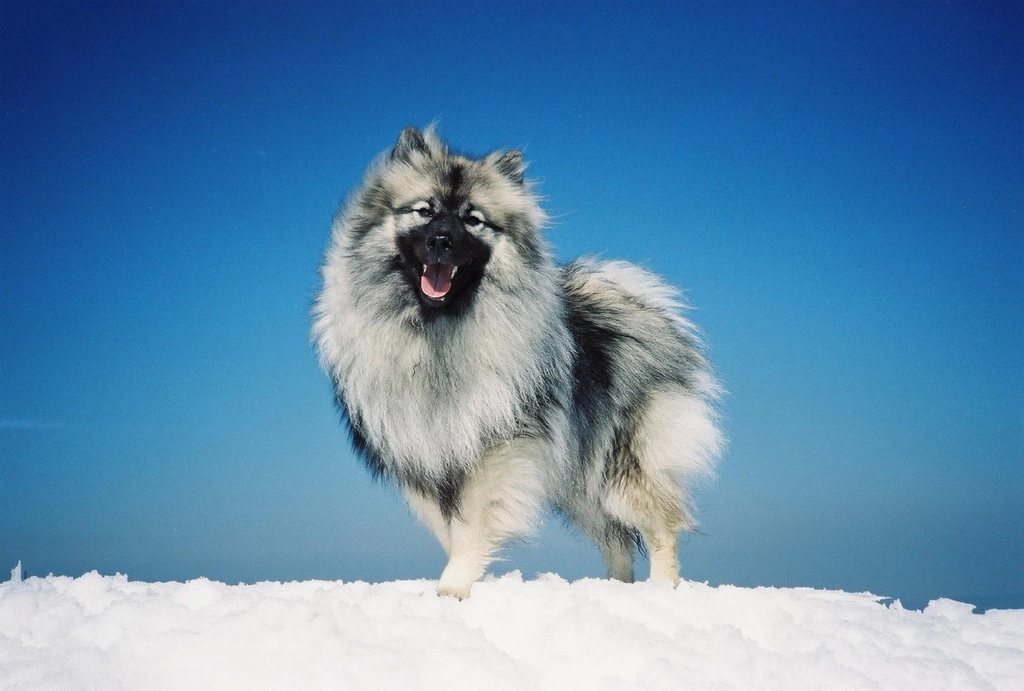
Snowshoeing is the winter activity that suits dogs best. The pace is walking pace, the trails are quiet, and a dog that overheats on a summer hike is in its element at minus ten. But snow changes the rules in two ways that catch people out. The first is physics: we float on our snowshoes while the dog does not, and a deep-powder day that is easy for us can be exhausting or dangerous for a dog. The second is manners: much of the best winter trail network is groomed for cross-country skiing, and a dog on a set track is one of the most resented sights in the sport. This guide covers both, along with the cold-weather care that keeps paws and ears intact.
Floating versus sinking: the arithmetic of snow
A snowshoe works by spreading weight. An adult of 80 kg on a pair of shoes measuring around 25 by 76 cm stands on roughly 3,000 square centimetres, which puts about 27 grams on each square centimetre of snow. A 25 kg dog stands on four paws with a combined area of perhaps 100 to 120 square centimetres, which puts over 200 grams on each square centimetre, nearly ten times more. That is why we float and the dog sinks. On a firm crust or a packed trail the difference is invisible; on 40 cm of fresh powder the dog is swimming, and every step is a jump. Long-legged, light-framed dogs cope best. Short-legged and heavy-bodied dogs post-hole to the chest and tire within a kilometre. The practical answer is to let the dog follow in the trench our snowshoes make, where the snow is compressed, rather than break trail beside us. That also keeps the dog behind the shoes, which matters because the crampons and toothed edges under a modern snowshoe can slice a paw that lands under them. We watch for the dog stopping, lying in the snow or biting at the crust, all of which mean it has had enough.
Cold tolerance and how long to stay out
Most healthy double-coated dogs are comfortable to around minus 15 C while moving, and thick-coated northern breeds far below that. Short-haired, thin-skinned and small dogs start to struggle below about minus 5 C, sooner in wind, and a coat that covers the chest and belly makes the difference between a one-hour and a three-hour outing. Snow on the belly melts, wets the fur and pulls heat continuously, so a wet short-haired dog is a cold dog long before the thermometer suggests trouble. Ears, tail tips and the scrotum are the usual sites of frostbite, showing as pale, cold skin that later reddens and swells. We turn back at the first shiver, the first tucked tail or the first time the dog lifts a paw and holds it up, and we plan winter outings shorter than summer ones, typically one and a half to two hours with a warm car at the end.
Paws, ice balls and road salt
The most common winter complaint is not cold but ice balls: snow packs between the pads, melts slightly with body heat, refreezes and grows until the dog is walking on marbles. Long-haired dogs suffer most. Trimming the fur between the pads level with the pad surface before the season removes the anchor the ice needs, and a thin layer of wax-based balm applied at the trailhead stops snow sticking for an hour or two. Booties work for dogs that tolerate them, and a set with a stiff sole and a Velcro strap above the wrist stays on in deep snow; we practise indoors first, because a dog meeting booties on a frozen trail will stand and refuse to move. Road salt and de-icing grit on the walk from the car burn cracked pads and are toxic when licked off, so we wipe paws at the car. On the drive home, we check between every toe for cuts from crust, a task that takes a minute and finds problems while they are still small.
Groomed cross-country tracks: what they are and why dogs are a problem
A groomed trail is a corridor of machine-packed snow, often eight to ten metres wide, with two parallel grooves cut along one edge for classic skiing and a flat lane beside them for skate skiing. Setting it takes a groomer several hours each night and is paid for by ski passes. A dog running down the classic grooves collapses their walls; paw prints freeze into hard lumps that catch a ski at speed; and urine and faeces, even when the solids are picked up, contaminate the snow that skiers fall on and glide over. That is why most ski centres ban dogs entirely from groomed trails, and why the ones that allow them do so only on a specific marked loop, on a leash, and often only at particular hours. We do not argue with this. Where dogs are permitted, we stay on the edge of the skate lane, off the classic grooves, we keep the dog on a two-metre leash, and we step fully off the trail to let skiers pass, because a skier descending has no brakes and no way to swerve around a dog.
Where to snowshoe with a dog instead
The best dog trails in winter are the ones not groomed for skiing at all. Many ski areas have a separate snowshoe network, sometimes with a dog-friendly section; forest roads closed to vehicles in winter make wide, safe routes with easy footing; and summer hiking trails under snow are fair game where the land manager allows dogs in summer. We check winter closures, since some trails that are open to dogs from May to October close in winter to protect wintering deer and elk, and we stay out of terrain with slopes over about 30 degrees when the avalanche forecast is elevated, because a dog cannot read the bulletin and will happily trigger a slope we would avoid. A dog carried off by an avalanche has the same odds as a person, and no transceiver.
A short kit list for a winter day
- Insulated coat for short-haired dogs, sized to cover the chest and belly
- Paw balm or booties, tested at home, and a small towel for the car
- A litre of water in an insulated bottle, because dogs eat snow but do not drink it
- A two-metre leash for groomed areas and a longer line for open terrain
- High-calorie treats, since a cold dog burns considerably more energy than a warm one
Snowshoeing with a dog is quiet, cold and slow in the best possible way. Let the dog follow in the trench, keep it off the ski grooves, watch the paws and the ears, and the winter becomes the season the dog looks forward to most, which in our experience is saying something.