
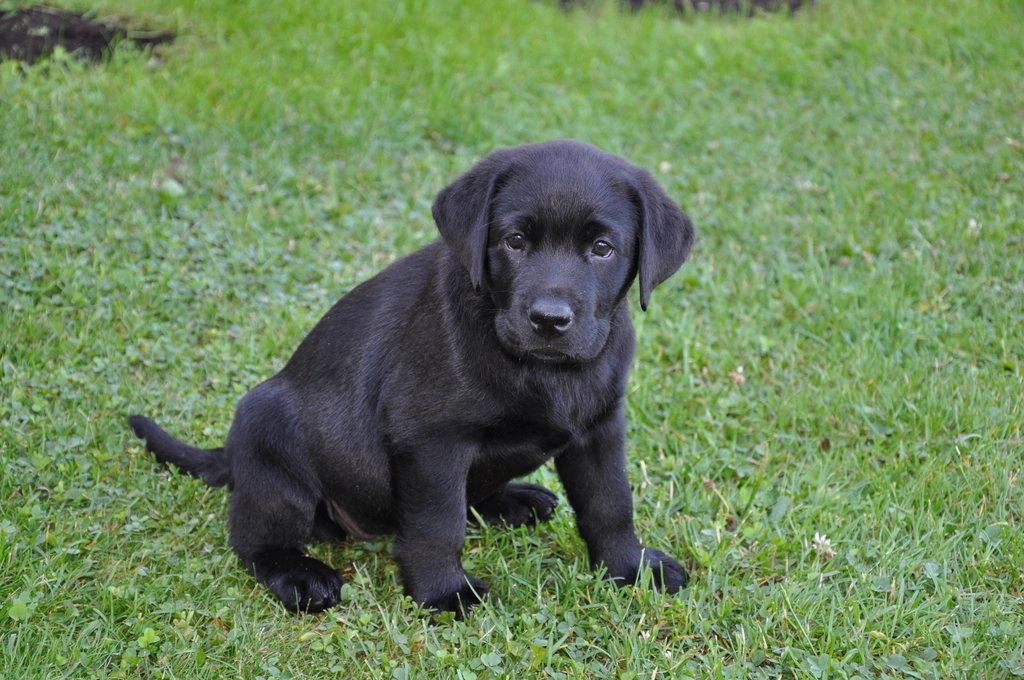
Somewhere around eight months, the puppy that came when called, walked politely and slept through the night begins to act as if it has never met us. The recall becomes optional. The leash goes tight. Familiar dogs are suddenly a big deal. Owners often describe it as training that has disappeared, and the feeling is real, but the training has not gone anywhere. The dog has changed. Adolescence in dogs runs roughly from six or eight months to eighteen months, sometimes two years in large breeds, and it reshapes the brain, the body and the priorities all at once. Knowing what is happening makes it easier to keep going.
What is changing in the dog
Three things happen at once in an adolescent dog. Sex hormones rise, whether or not the dog will later be neutered, and with them come new interests: scent marking, other dogs, distant smells, territory. The brain is remodelling; the parts involved in impulse control mature later than the parts involved in wanting things, which is why a teenager can know a rule perfectly and still not follow it. And the body grows into its adult power. A dog that pulled a little at five months and thirteen kilos pulls hard at eleven months and twenty-five.
Research on adolescent dogs has found a measurable dip in responsiveness to their own owners around eight months, most pronounced in dogs with a less secure attachment, and a corresponding drop in how quickly they obey a familiar cue from that person. It passes. But it explains why the dog that ignores us will still sit for a stranger in the park.
What it looks like on the trail
The trail is where adolescence shows most, because it is where the competing interests are strongest. Common patterns include a recall that works until the moment there is a scent trail, then evaporates. A dog that used to walk near us now ranges fifty metres ahead and checks in less. A previously easy-going puppy starts staring at other dogs, barking at them, or being rude on greeting, and gets told off by an older dog for the first time. Fear periods also occur in adolescence: a dog that was fine with rushing water or cattle suddenly is not, for a few weeks, and then is again.
None of this is the dog testing us. It is the dog being pulled by things that were not there before, with a brain that is not yet good at saying no to itself.
What not to do
The temptation is to get firmer. Louder recalls, harsher leash handling, more corrections. This is exactly the wrong direction. An adolescent that learns that its owner is unpredictable or unpleasant will check in less, not more, and the attachment that is already wobbling will wobble further. It is also the age at which a dog is most likely to be rehomed, and most of those decisions are made in the middle of a phase that would have passed.
The other temptation is to give up on training and just manage: keep the dog on a leash, avoid other dogs, wait it out. Management is necessary, but on its own it wastes the year. The habits laid down in adolescence tend to stick, good and bad, because the brain is so plastic. This is the time to invest, not to coast.
What to do instead
The plan is to lower the difficulty, raise the pay, and keep the dog safe while the brain catches up. In practice that means the following.
- Go back to the long line for recall, even if the dog was off leash at six months. Prevent the rehearsals of ignoring us.
- Re-teach the basics as if new: recall, leave it, loose leash, settle. Sessions of three to five minutes, several times a day, in easy places first.
- Raise the reward value sharply. What worked for a puppy is not enough for a dog that can now smell a fox two fields away.
- Give the dog legal outlets for what it wants: scent games, sniff walks, chew time, play with well-matched dogs.
- Protect it from bad experiences with other dogs. One bad fight at ten months can set a lifelong pattern.
- Keep the routine steady. Adolescents do better with predictable days, sleep and mealtimes than with chaos.
Above all, keep the relationship pleasant. The single strongest predictor of an adult dog that listens is an adolescent that found its owner worth listening to.
Exercise, growth plates and the neutering question
An adolescent dog has energy to burn and bones that are not finished. The growth plates in the long bones close somewhere between twelve and eighteen months, later in larger breeds. Before that, repetitive high-impact work, long runs on hard surfaces, and jumping down from heights carry a real risk of injury that does not show until later. It is fine for a young dog to hike, and to hike a fair distance on natural ground, but the load should build slowly and the dog should set the pace on descents rather than being pulled along on a leash. A tired adolescent is easier to train, but a sore one is not; look for a dog that is pleasantly done at the end, not one that is stiff the next morning.
Mental work tires an adolescent more thoroughly than distance does. Twenty minutes of scent games in the garden, or a slow walk where the dog is allowed to investigate everything, often produces a calmer evening than a ten-kilometre march.
Many owners hope that neutering will end the phase. It does not; the brain changes go on regardless, and the behavioural effects of neutering vary by dog, by sex and by timing. There is evidence that neutering before the growth plates close affects skeletal development in some larger breeds, and the evidence on fearfulness and on certain cancers points in different directions depending on the study. This is a decision to make with a veterinarian, based on the individual dog, rather than as a fix for pulling on the leash.
The other side
Around eighteen months, sometimes later, the fog lifts. The recall comes back, often better than it was, because we spent the year rebuilding it against harder distractions. The dog checks in on the trail without being asked. The staring at other dogs turns into a glance and a return to business. The owners who come out of adolescence with a good dog are almost never the ones who had an easy time; they are the ones who kept training through the part that felt pointless. The puppy did not vanish. It was becoming the dog, and we were part of how it turned out.