
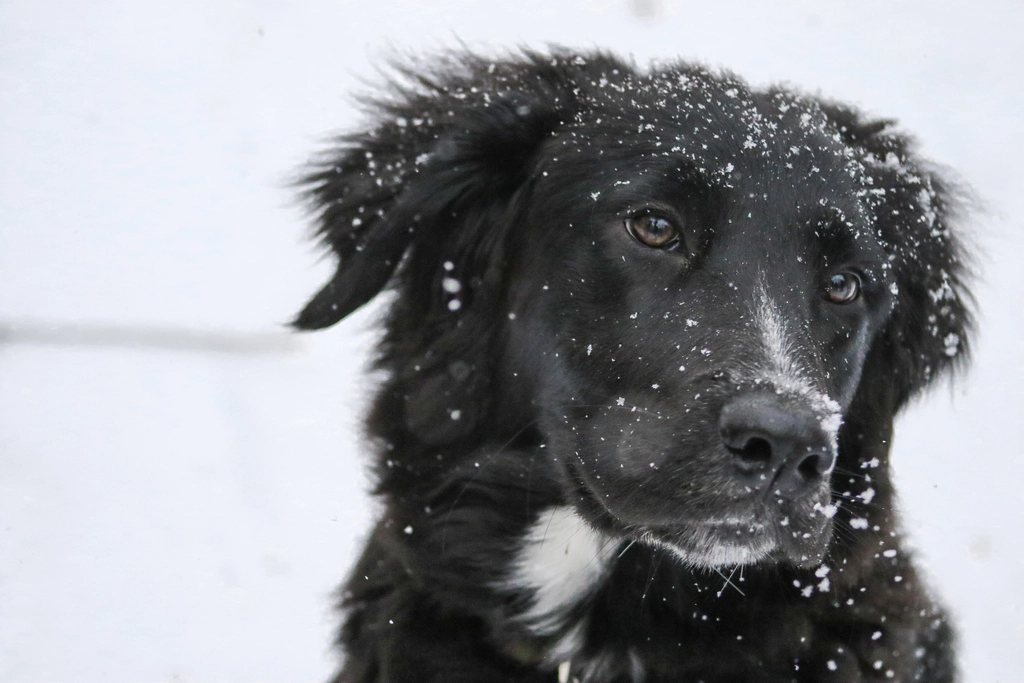
Winter is our favourite season with a dog. The trails are quiet, the ticks are gone, the heat that limits summer walks is no longer a concern, and most dogs are visibly happier at minus five than at plus twenty-five. But cold has its own set of risks, and they are less obvious than heat because a dog in trouble in the snow looks, for a long time, like a dog having a wonderful day. This is what we have learned about matching the dog to the temperature, protecting the feet, and recognising cold injury before it becomes serious.
Cold tolerance depends on the coat
A dog’s insulation is its coat, and coats differ enormously. Double-coated northern types, the huskies, malamutes and similar, have a dense woolly undercoat under long guard hairs and are comfortable at minus twenty and below when moving. Thick-coated herding and mountain types sit close behind them. Single-coated dogs, from greyhound types to many terriers and most short-haired hunting dogs, have little insulation and start to feel cold around freezing, sooner in wind and wet. Small dogs lose heat faster than large ones because they have more surface area for their mass, and puppies, seniors, thin dogs and dogs with joint or thyroid conditions all cope less well.
As rough guides: most healthy medium and large dogs with a normal coat are fine down to about minus seven with no extra protection while walking; below that, short-coated and small dogs need a jacket and their time out should be shortened; below about minus twelve, we watch every dog closely and keep outings short for anything but a true cold-weather breed; and in wind or rain those thresholds move up by several degrees, because a wet coat has lost most of its insulating value. A jacket for a short-coated dog should cover the chest and belly, not just the back.
Ice balls between the pads
The commonest winter problem is the least dramatic. Snow at or near freezing melts on contact with the warm pad, refreezes among the hairs between the toes and builds into hard lumps that force the toes apart and rub the skin raw. Long-haired dogs suffer worst, and a dog that keeps stopping to chew at its feet, or that begins to walk on three legs in soft snow, almost certainly has ice balls. Prevention has three parts: trim the hair between the pads flush with the pad surface before the season, apply a wax-based balm to the pads and between the toes before each walk so that snow cannot bond to the hair, and check the feet every half hour, spreading the toes and breaking out any ice by hand. Booties with a fleece or waterproof upper stop the problem entirely and are worth the training time for dogs that hike in snow every weekend. On refrozen, crusty snow, the crust cuts pads as well, and a dog that is post-holing through it is being sliced at every step; we choose packed trails on those days.
Frostbite on ears, tail and toes
Frostbite happens when tissue freezes, and in dogs it strikes the parts that are thinly furred and far from the core: the tips of the ears, the end of the tail, the toes and, in males, the scrotum. It is most likely in wind, in wet conditions, and in dogs that have stopped moving. The affected skin first turns pale, grey or bluish and feels cold and hard; as it warms it becomes red, swollen and painful, and in serious cases it later blisters, blackens and dies. Because the early stage is easy to miss under fur, we check ear tips and tail ends at rest stops on any day below minus ten, feeling for skin that is unusually cold or stiff. Treatment in the field is to get the dog out of the wind and warm the area gently with body heat or lukewarm water, never by rubbing and never with direct heat, and then to have a vet look at it, since the true extent of damage is not visible for several days.
Recognising hypothermia
Hypothermia is the whole-body version of the same problem, and it creeps up on wet or thin dogs long before the owner feels cold. The signs, in order:
- Shivering, lifting paws off the snow, whining, and seeking shelter or trying to climb up on the owner.
- Slowing down, stiff and clumsy movement, and a loss of interest in the walk.
- Shivering stops, the dog becomes lethargic and confused, the gums pale, breathing and heart rate slow.
- Collapse and unresponsiveness, which is an emergency.
At the first stage we turn around; a jacket, movement and getting out of the wind are enough. By the third stage the dog needs to be dried, wrapped, warmed slowly with our own body heat and blankets, and taken to a clinic, because rewarming a severely cold dog too fast can cause a collapse of its own.
Water and food in the cold
Dogs dehydrate in winter as readily as in summer; cold air is dry, panting still loses moisture, and eating snow does not replace it. We carry water in an insulated bottle so it does not freeze and offer it at every rest, and we do not rely on the dog eating snow, which chills the core for very little fluid. A hard day in the cold can raise a dog’s energy needs by a quarter or more, so we bring an extra portion of food and feed small amounts during the walk rather than one large meal before, which can cause discomfort or worse in deep-chested dogs.
Ice, avalanche terrain and the walk home
Frozen lakes and rivers are the winter hazard that kills dogs most surely. A dog cannot judge ice thickness, and an owner who goes in after a dog is in far more danger than the dog. We leash near open water and never let a dog onto ice we have not tested ourselves. In mountain terrain, a dog roaming above a slope can trigger a slab, and it will not be wearing a transceiver; in avalanche country we keep the dog with us on the leash. And at the car, the walk is not finished: we towel the dog dry, check paws for ice and cuts, rinse off any road salt, and get the heating running before we do anything about ourselves. A dog that arrives home dry, fed and warm will be ready for the next snowfall.