
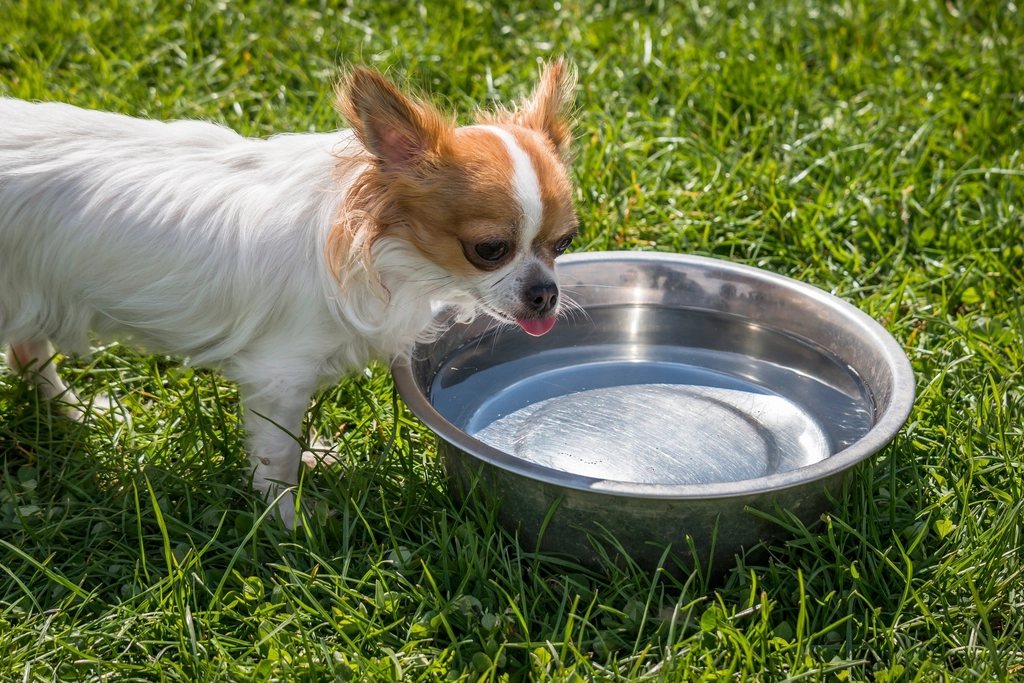
Water is the item we most often see people forget for their dog, and it is the one that matters most. A dog cannot tell us it is thirsty until it is already dehydrated, and it cannot judge whether the green pond at the side of the trail is safe. Over years of walking with dogs in dry hills, wet forests and alpine meadows, we have settled on a few numbers for how much to carry and a few firm rules about which water sources to allow. This article sets them out.
How much a dog drinks
At rest, a healthy dog drinks roughly 50 to 60 millilitres of water per kilogram of body weight per day, so a 20 kg dog takes in around a litre. Exercise, heat and panting push that figure up fast, because every breath of panting loses moisture. A working guideline for hiking is about 50 to 100 ml per kilometre for a medium-sized dog on a mild day, and up to double that in heat or on steep ground. For a 20 kg dog on a 12 km walk at 18 C, that means about one litre over the day; on a 25 C day the same walk may need two. Small dogs drink less in total but more per kilogram, and large dogs simply need a lot: a 35 kg dog on a long summer day can easily drink three litres.
We offer water every twenty to thirty minutes on the move, whether the dog seems to want it or not, and we let the dog take small amounts rather than a huge bowl at once. A dog that gulps a litre after a long hot stretch can bring it straight back up, and in deep-chested breeds a distended stomach followed by exercise is a risk factor for bloat.
Reading dehydration
Signs come in stages. Early, the dog pants more heavily, the gums feel tacky rather than slippery, and the dog starts looking for shade and slowing. Later, the skin at the scruff does not spring back quickly when gently lifted, the eyes look sunken, the gums are pale or dark and dry, and the dog becomes lethargic. A quick test we use at rest stops is to press a finger on the gum and watch the colour return: two seconds or less is normal; slower means the dog needs water and rest now. By the time a dog is stumbling or refusing to move, the problem has gone beyond what a bowl of water will fix, and the walk is over.
Giardia and the trouble with natural water
Streams look clean, and often they are not. The organism we worry about most is giardia, a single-celled parasite shed in the faeces of wildlife, livestock and other dogs. Its cysts survive for weeks in cold water and are found in a large share of surface waters worldwide, including alpine streams that look pristine. Dogs pick it up by drinking contaminated water or licking contaminated paws. Symptoms, typically a week or so later, are soft, greasy, foul-smelling diarrhoea, sometimes with mucus, weight loss and a dull coat. Many dogs carry it without symptoms and shed cysts that infect other dogs. Treatment is straightforward but takes a course of medication and thorough cleaning, and reinfection is common in dogs that keep drinking from the same sources.
Giardia is not the only concern. Leptospirosis is a bacterial infection carried in the urine of rats and other wildlife, concentrated in slow or standing water, and it can damage the kidneys and liver of dogs and is transmissible to people. Cryptosporidium and various bacteria round out the list. Fast, cold water high on a mountain, well above any grazing, is the lowest risk; a warm pond in a valley with cattle is the highest.
Why stagnant water is a special problem
Standing water concentrates everything: parasites, bacteria, decaying matter and, in late summer, blue-green algae. Cyanobacteria bloom in warm, still, nutrient-rich water, forming a green, blue-green or brownish scum or turning the water the colour of pea soup. Some blooms produce toxins that attack the liver or the nervous system, and a dog can die within hours of drinking or even swimming in an affected pond and then licking its coat. There is no field test to tell a toxic bloom from a harmless one, so our rule is absolute: no drinking, swimming or wading in any water with visible scum, foam or a green tint, and no exceptions for a hot dog on a hot day. Signs of poisoning include drooling, vomiting, weakness, tremors and seizures, and they call for an emergency vet immediately.
What we carry and how we manage it
Our rule of thumb is to carry enough water for the dog to drink from our supply alone if there is nothing safe on the route, and to treat any natural water as a bonus rather than a plan. In practice that means:
- A minimum of one litre for a medium dog on a half-day walk, two litres on a hot or dry day, in addition to our own.
- A collapsible silicone bowl, because most dogs will not drink well from a bottle poured in the air.
- A small filter or purification tablets, so that on a long day we can refill from a clean-looking stream for the dog as well as for ourselves; a filter that removes giardia cysts protects the dog too.
- A habit of offering water at every rest, at the summit and again at the car, and of watching how much actually gets drunk.
We also teach a firm leave-it around water. A dog that will wait for the bowl rather than lunging at every puddle is far easier to keep healthy, and the training takes only a few weeks of consistent walks.
Salt water, snow and other false friends
A few sources deserve a warning of their own. Sea water makes dogs sick and dehydrates them further; on coastal walks we carry fresh water and stop the dog drinking from the sea. Snow is mostly air, so a dog eating snow to quench thirst takes in little water while cooling its core, and in quantity it can cause stomach upset; it is fine as a top-up, not as the supply. Puddles on roads and car parks may carry oil, antifreeze and de-icing salt, and antifreeze in particular is sweet-tasting and lethal. A bowl of clean water from our pack solves every one of these problems, which is why it is always the first thing we put in.