
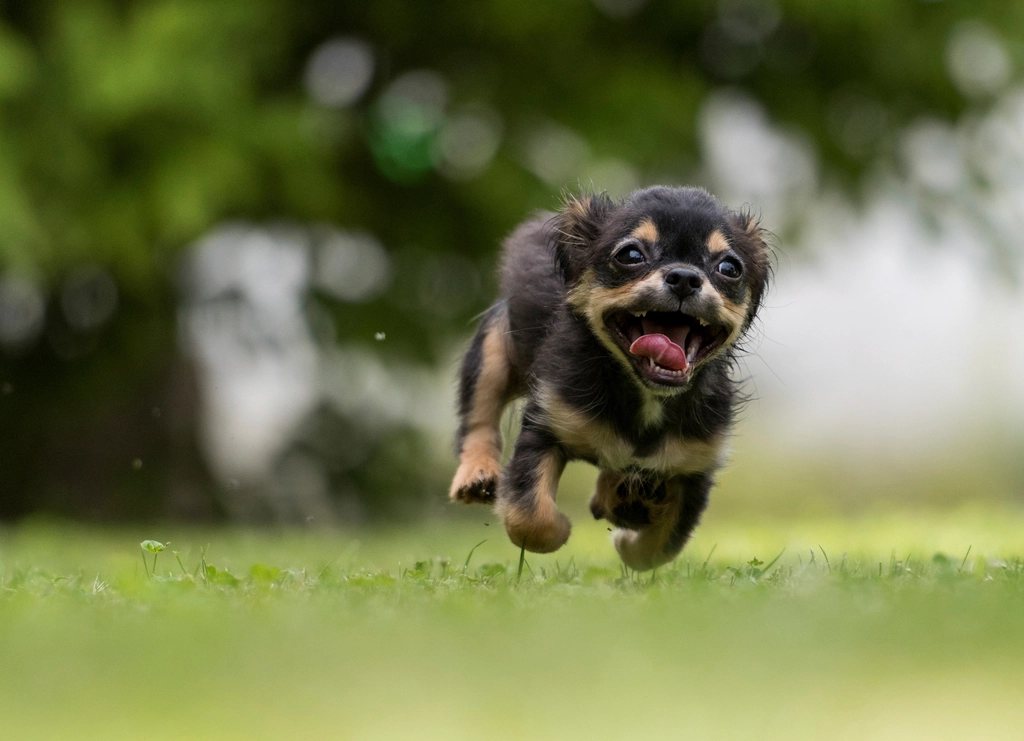
A recall that works in the garden and fails at the sight of a deer is not really a recall; it is a hope. On a trail the difference matters. A dog that comes back from a distraction can be off the leash where rules allow, can be kept away from a cliff edge or a road, and can be called off a sheep before anybody has to decide what happens next. Building a recall that survives distraction takes three things used together: a long line so the dog cannot practise ignoring us, a jackpot reward so coming back is the best thing that happens all day, and a whistle so the cue sounds the same whether we are calm, cross or out of breath.
Why recalls fail in the field
Most recalls are taught in quiet places and then used in busy ones. That jump is where they break. A dog that has learned to come when there is nothing else to do has learned nothing about coming when there is a rabbit. There is also a payoff problem. If coming back usually means the leash goes on and the walk ends, the dog learns that the cue predicts the end of fun and starts coming back slowly, or not at all.
The third cause is the cue itself. A name shouted twelve times in an increasingly frustrated voice becomes background noise, and worse, it becomes a warning that we are annoyed. Dogs are excellent at reading tone. A cue that has been poisoned by anger is hard to recover, which is one reason to switch to a whistle when starting over.
The long line: management first
A long line is a light leash of ten to fifteen metres, attached to a harness, that trails on the ground. It does not restrain the dog most of the time; it simply gives us the option. When the dog starts toward a distraction and does not respond, we step on the line, and the run ends without a chase or a scolding. The dog does not get to rehearse ignoring the cue and arriving at the reward.
Use a line that will not burn hands, keep gloves on if the dog is fast, and never wrap it around fingers. Trim the length to the environment: five metres in woods full of snags, fifteen on open grass. The line stays on for the whole training period, which for most dogs is a couple of months, and in some environments it stays on for life. That is not a failure. Some places have wildlife, livestock or traffic that no recall is worth betting against.
Teaching the whistle
Any whistle will do if it has a consistent pitch; the point is that it sounds identical every time. Choose a pattern, for instance three short pips, and keep it for recall only. Start indoors: blow the pattern, then immediately feed a small handful of excellent food, several pieces one after the other. Do this ten times a day for a week without asking the dog to do anything. We are pairing a sound with a feast.
Then, in the garden, blow the pattern while the dog is a few metres away and mildly occupied. It should come running; feed the same way. Gradually add distance and mild distraction. The rule for the whole process is that the whistle is never blown when we cannot back it up, either because the dog is certain to come or because the long line lets us gently reel in and reward anyway. A whistle that is blown and ignored has just lost some of its value, and it takes many good repetitions to buy that back.
The jackpot and the rest of the reward system
Most recall rewards are too small and too slow. A single biscuit dropped in front of a dog that just left a hare is an insult. A jackpot is a reward that stands out from the rest: a whole handful of meat fed piece by piece for ten or fifteen seconds, a tug game with a favourite toy, a burst of running together, or a release straight back to the thing the dog was leaving. Jackpots are given for the recalls that were hard, not for every recall, so the dog learns that coming when it is difficult sometimes pays enormously.
The rest of the system is about keeping the cue honest. Call the dog often for no reason, reward, and send it off again. Aim for a ratio where most recalls are followed by freedom, not the leash. When the walk really is ending, call the dog, reward, clip on the leash, and then walk a few more minutes before the car. The leash should not predict the end.
A handful of habits make the reward work harder.
- Carry the good food in a pocket, not a pack, so it is out before the dog arrives.
- Feed at the front of our body, low, so the dog comes all the way in and can be held by the harness.
- Turn and run a few steps away as the dog approaches; movement pulls a dog in faster than standing still.
- Touch the collar or harness before feeding, every time, so the grab is part of the game rather than a trap.
Adding distractions in the right order
Distraction is a ladder, and skipping rungs is how recalls break. A sensible sequence starts with a scattered handful of dry kibble on the ground and the dog called away from it, then a toy left on the grass, then a helper standing still, then a helper walking, then a calm dog on a leash at a distance, then the same dog closer, then a moving dog. Wildlife comes last, and it is best approached by proxy: a scent-heavy hedge, a field where deer have been, the edge of a wood at dusk with the dog on the long line, called back at the first sign of interest rather than the last.
Each rung is worked until the dog comes cleanly nine times in ten before the next one is tried. If a level fails twice, drop down. Recall training is not a place for testing; it is a place for stacking successes until the dog has no memory of any other outcome.
Living with the result
A trained recall is maintained, not finished. Several times each walk, for the life of the dog, blow the whistle, reward, and release. Keep the jackpot in reserve for the days when the dog comes back from something genuinely tempting, and make those days memorable. Watch for the slow decay: a dog that starts coming back at a trot instead of a gallop is telling us the pay has become predictable.
Finally, know the limits. Some dogs, particularly those bred to hunt by sight or scent, will never be reliable around running game, and the long line is their permanent companion in the wrong terrain. That is not a training failure. It is a good decision made by someone who knows their dog, which is the whole point of the exercise.