

Key takeaway: The 3-3-3 rule structures feline adoption into three phases: 72 hours to decompress, 3 weeks to learn routines, and 3 months for full integration. This framework manages expectations, helping owners transition from managing survival instincts to fostering deep trust. Patience is vital, as milestones like kneading or exposed bellies signal a cat’s successful permanent territorial ownership.
Adopting a rescue often involves a silent waiting period where your new companion remains hidden behind furniture or under beds. While many expect instant affection, most feline transitions follow the 3-3-3 rule, a structured timeline of decompression, adjustment, and eventual integration. You might feel discouraged when your cat refuses to eat or interact during those first few days.
This guide explains how to navigate each milestone to transform a fearful shelter cat into a confident family member. We will explore the specific environmental needs and behavioral cues necessary to build lasting trust over the first three months.
- Understanding the Shelter Cat 3-3-3 Rule for New Owners
- Surviving the First 72 Hours of Decompression
- How to Build Security Through Routine After Three Weeks
- Reaching Full Integration After Three Months
Understanding the Shelter Cat 3-3-3 Rule for New Owners
The 3-3-3 rule structures feline adoption into three phases: 72 hours for decompression, 3 weeks for routine adjustment, and 3 months for full integration. These milestones dictate the pace of bonding and environmental exploration.
The timeline begins with the immediate psychological shift from shelter stress to home safety, defining the specific goals of each developmental milestone.
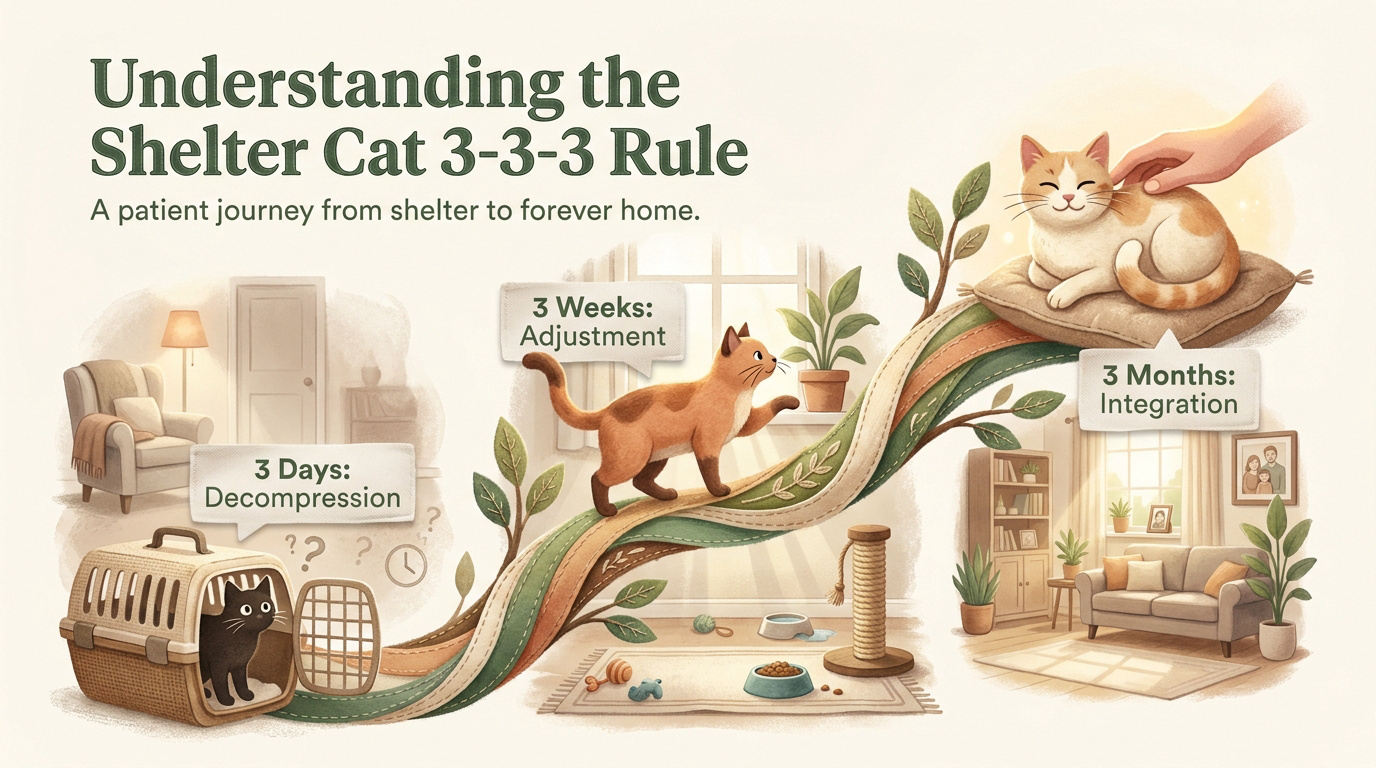
The Three Distinct Phases of Feline Adjustment
Adoption unfolds through three phases: 3 days of decompression, 3 weeks of adjustment, and 3 months for integration. Survival instincts dominate the first few days. Your cat stays alert.
Psychologically, the goal shifts from basic survival to curiosity. Fear slowly fades. Eventually, the cat develops a sense of permanent territorial ownership. They finally feel safe in their space.
The 3-3-3 framework manages human expectations effectively. Rushing these phases often causes behavioral setbacks. Patience correlates with long-term trust. When a Shelter Cat Takes Months to Emerge: Understanding the 3-3-3 Rule is vital for success.
How Age and History Influence the Recovery Speed
Kittens usually bounce back faster than seniors. Older residents require more time. They must unlearn old habits. Environmental stressors impact older cats more heavily than young ones.
Previous trauma affects the standard timeline significantly. Abuse or neglect creates deep-seated fear. These cats might stay in decompression for weeks. Three days is just a general baseline.
Rescues prioritize hiding spots for survival. Breeders’ cats have different needs. Understanding backgrounds helps owners tailor their approach. Specialized care ensures the cat feels safe during the initial transition. Individual personality matters.
Surviving the First 72 Hours of Decompression
While understanding the timeline is vital, the first three days require specific environmental setups to prevent sensory overload.
Creating a Sanctuary and Vertical Safe Zones
Set up a quiet safe room in a spare bedroom or a secluded corner. Keep noise levels extremely low to avoid startling your new arrival. Small, controlled spaces prevent the cat from feeling overwhelmed.
Vertical territory is a massive confidence builder for a fearful cat. They feel safer observing threats from above. Cat trees or cleared shelves provide essential escape routes from floor-level stressors.
Use a “Checklist for Success” during these first 72 hours. Include a litter box, fresh water, and multiple hiding spots. This setup limits their need to explore the entire house too quickly.
Reading Tail Positions and Ear Movements
Watch for specific tail and ear positions that signal high stress levels. Flat ears and a tucked tail clearly indicate fear. A twitching tail tip suggests growing irritation or internal anxiety.
Use slow blinks to communicate safety to your new companion. This feline gesture signals non-threatening intentions. It is the most effective way to bond without physical contact or staring.
Interpret dilated pupils as a sign the cat is feeling overwhelmed. Large pupils often mean sensory overload. Watch these subtle cues to know exactly when to give them more space.
Managing the First 24 Hours of Refusal to Eat
Many cats refuse food during the first day because stress temporarily shuts down their digestive system. Offer highly aromatic wet food to entice them. Don’t panic if they skip a meal, but monitor water intake closely.
Pheromone diffusers help lower environmental tension by mimicking natural feline scents. They soothe the nervous system during peak decompression.
Contact a vet if food refusal lasts beyond 24 hours. Hepatic lipidosis is a serious risk for cats who stop eating entirely. Early intervention prevents grave health complications.
How to Build Security Through Routine After Three Weeks
Once the initial shock wears off, the focus shifts from survival to the comfort of a predictable daily schedule.
Why Consistent Feeding Schedules Reduce Anxiety
Predictable meal times anchor feline territorial security. Cats thrive on consistency. Knowing when food arrives reduces the need for anxious begging or territorial patrolling.
Specific play routines burn off nervous energy. Use wand toys to mimic hunting. This builds confidence and strengthens the bond between owner and pet.
Consistent feeding impacts sleep patterns significantly. A late-night meal can prevent 3 AM wake-up calls. Routine stabilizes the cat’s internal clock. This predictability makes the new environment feel like a permanent home.
Scent Swapping and Safe Pet Introductions
Scent swapping introduces pets in multi-animal households. Rub a cloth on one pet and place it near the other. This introduces animals through smell before they ever meet visually.
Expand access to the rest of the home gradually. Open one door at a time. Let the cat explore at its own pace without being forced into new rooms.
Manage introductions to family members with care. Tell children to remain calm and seated. Let the cat initiate the first physical contact to ensure they feel in control of the interaction.
Reaching Full Integration After Three Months
By the third month, the cat usually reveals its true personality, marking the final stage of the transition process.
Identifying Red Flags vs Normal Adjustment Signs
Look for rhythmic kneading and slow, deliberate stretching. These physical cues prove your cat feels secure. Seeing an exposed belly is the ultimate trophy of trust in their new home.
Hiding is normal early on. But persistent lethargy or litter box accidents demand a vet visit. You must distinguish between temporary shyness and chronic distress that threatens their physical health.
Watch those grooming habits closely. Over-grooming often signals high anxiety levels. Conversely, a cat that stops cleaning itself entirely might be ill or suffering from severe depression.
When to Consult a Professional Cat Behaviorist
If your cat hasn’t left the bed in weeks, you need professional help. Behaviorists spot environmental triggers that we often miss. Intervention is necessary when hiding becomes a permanent lifestyle.
Pheromones or supplements can bridge the emotional gap. These tools work best alongside active behavior modification. Patience remains your most powerful asset when using these calming aids long-term.
When a Shelter Cat Takes Months to Emerge: Understanding the 3-3-3 Rule requires respecting boundaries. Sit nearby and read aloud quietly. Never reach into their safe spot; let them come to you instead.
Mastering the shelter cat 3-3-3 rule ensures a successful transition from survival to safety. Respect these milestones by maintaining strict routines and vertical sanctuaries to build lasting trust. Your patience today guarantees a future of purrs and kneading, transforming a shy rescue into a confident, loving family member.
FAQ
What exactly is the 3-3-3 rule for newly adopted cats?
The 3-3-3 rule is a professional guideline designed to help owners navigate the adjustment period of a shelter cat. It breaks down the transition into three key stages: the first 3 days for initial decompression, the first 3 weeks for learning the household routine, and the first 3 months for full integration and social security.
By following this framework, owners can better manage their expectations and recognize that behaviors like hiding or refusing food are often temporary responses to stress. It provides a roadmap for building long-term trust and ensuring the cat feels safe in its new permanent territory.
How long does it typically take for a rescue cat to feel comfortable in a new home?
While every cat is unique, most feline rescues require at least three months to fully settle in and reveal their true personalities. During the first few days, they are often in survival mode, but by the three-week mark, they usually begin to feel secure enough to explore and follow a daily schedule.
Factors such as age and history play a significant role in this timeline. For instance, senior cats or those with a history of trauma may stay in the decompression phase much longer than a kitten, requiring extra patience and a slower introduction to the home.
Why is my new cat hiding and refusing to eat during the first few days?
It is very common for a cat to hide or refuse food during the first 72 hours as they undergo decompression. The shift from a high-stress shelter to a new environment can temporarily shut down their digestive system or trigger survival instincts, leading them to seek out “safe zones” under furniture.
To help them, provide a quiet sanctuary room with vertical territory and use pheromone diffusers to lower anxiety. If a cat refuses to eat for more than 24 hours, it is important to monitor them closely and consult a vet, as prolonged fasting can lead to health issues like hepatic lipidosis.
What are the signs that my cat is finally starting to feel at home?
After about three months, you will notice physical signs of relaxation, such as slow stretching, kneading, and a loose, relaxed body posture. One of the ultimate signs of trust is when a cat exposes its belly or begins to accept treats gently from your hand.
You will also see a return to natural behaviors, including grooming, purring, and regular use of scratching posts. At this stage, the cat should be fully integrated into the family routine and show consistent litter box habits, signaling they no longer view the home as a temporary transition.
When should I consider seeking help from a professional feline behaviorist?
You should consult a professional if problematic behaviors, such as aggression, persistent hiding, or litter box accidents, continue beyond the initial three-month adjustment period. If a cat remains “shut down” and refuses to leave its safe spot for weeks, an expert can help identify environmental triggers.
A behaviorist provides tailored strategies to modify these actions and can work alongside your vet to rule out medical causes. Early intervention is key to resolving chronic distress and ensuring a harmonious relationship between you and your new companion.