
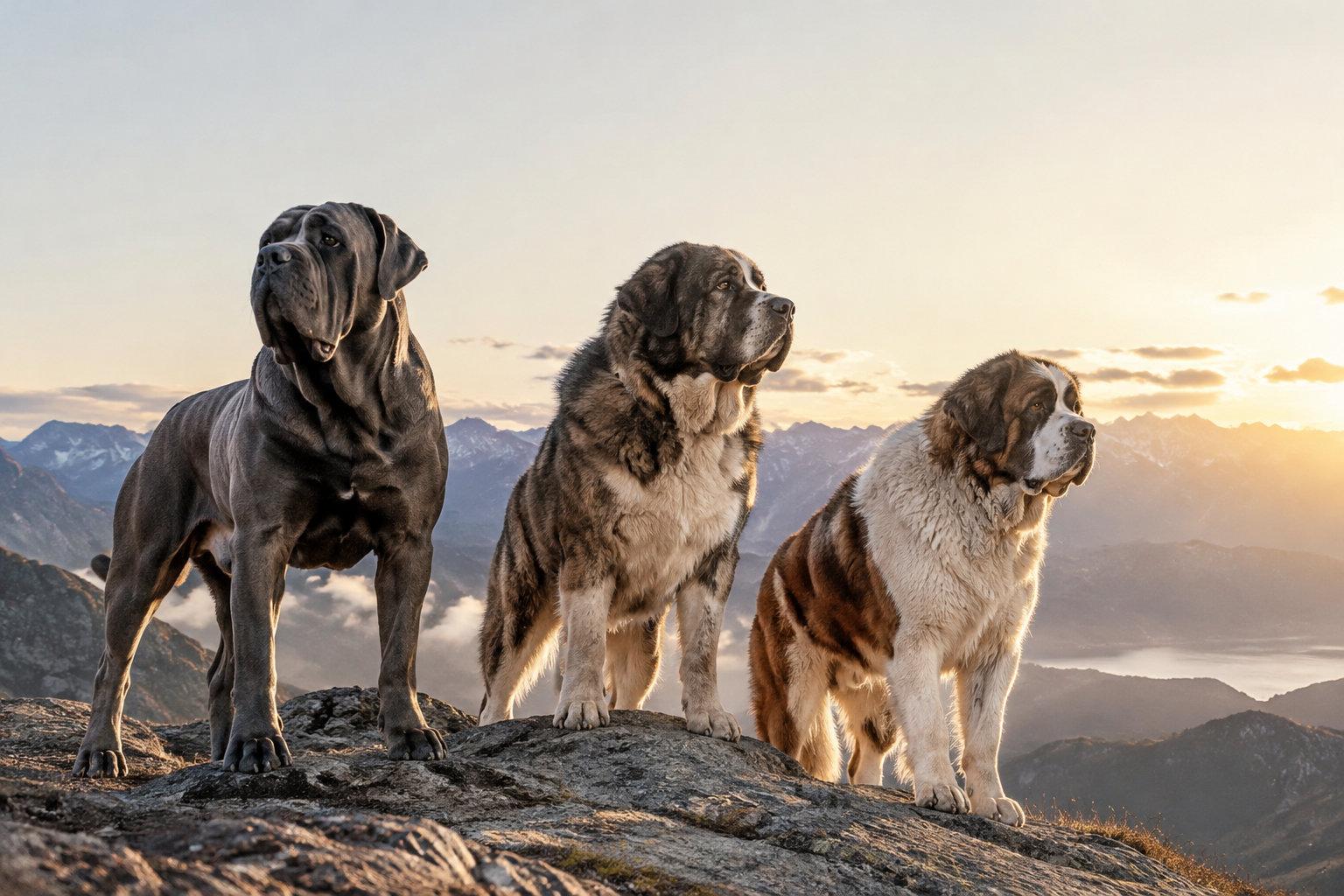
- No single breed is strongest by every measure: bite force, pulling power and endurance each need their own test.
- For heavy hauling, the Alaskan Malamute is the strongest candidate, built for freighting rather than racing.
- Size alone does not decide it, since a lighter, compact dog can produce more force for its weight.
- The widely repeated 743 PSI bite-force figure for the Kangal is an unverified estimate, not a confirmed record.
Contents
- The Strongest Dog in the World: Which Breeds Really Have the Power to Work
- Bite Force Rankings Shift Depending on How They Are Measured
- Working Power Varies Among Heavy Breeds for Pulling and Endurance
- Frequently asked questions
Ask about the strongest dog in the world, and you will hear a different answer each time. Some people think of biting, others of pulling or running.
This guide sorts the strongest dogs by build and real working power.
The Strongest Dog in the World: Which Breeds Really Have the Power to Work
Strength in dogs is not one single thing. It has three parts. Muscular strength is the ability to produce force. Power is producing that force quickly. Muscular endurance is the capacity to keep working without tiring.
A sprint test can capture whole-body power. But it says nothing about hauling strength or how far a dog can go.
Body mass helps a dog generate more absolute force. Yet size alone does not make one breed stronger in every situation. A heavy dog may push or carry more. A lighter, compact dog can produce more force for its weight.
Bite force measures the pressure a dog’s teeth can apply. It reflects jaw muscles, skull shape and body size. But it tells you nothing about pulling power, speed, stamina, balance or sustained work.
When the goal is hauling a heavy load, the Alaskan Malamute is a stronger candidate. Its official standard calls for a deep chest, powerful shoulders and strong bones. It also calls for a steady, tireless gait built for heavy freighting rather than racing.
Strength in dogs has three parts: muscular strength, power and muscular endurance. Each quality needs its own test.
Bite Force Rankings Shift Depending on How They Are Measured
How researchers measure canine bite force
Researchers can measure bite force in awake dogs. They use a force transducer, a device that records how hard a dog bites or chews.
They can also stimulate jaw muscles under anaesthesia. Another option is to estimate force from skull measurements. A third is to build a computer model from CT scans.
A newton (N) is a unit of force. PSI, or pounds per square inch, measures pressure over an area.
Popular breed lists tend to use PSI, while research papers usually report newtons. These measure different things, so their figures cannot be compared directly without knowing the method and contact area.
Awake testing captures a voluntary bite, but the dog may not bite at full effort. Anaesthetized testing removes motivation and fear. Electrical stimulation allows a controlled test, but it cannot show how hard a conscious dog bites.
Skull-model estimates avoid handling a live dog. They rely on jaw shape, skull size and lever mechanics. So they predict force rather than record a real bite.
What the measured studies show
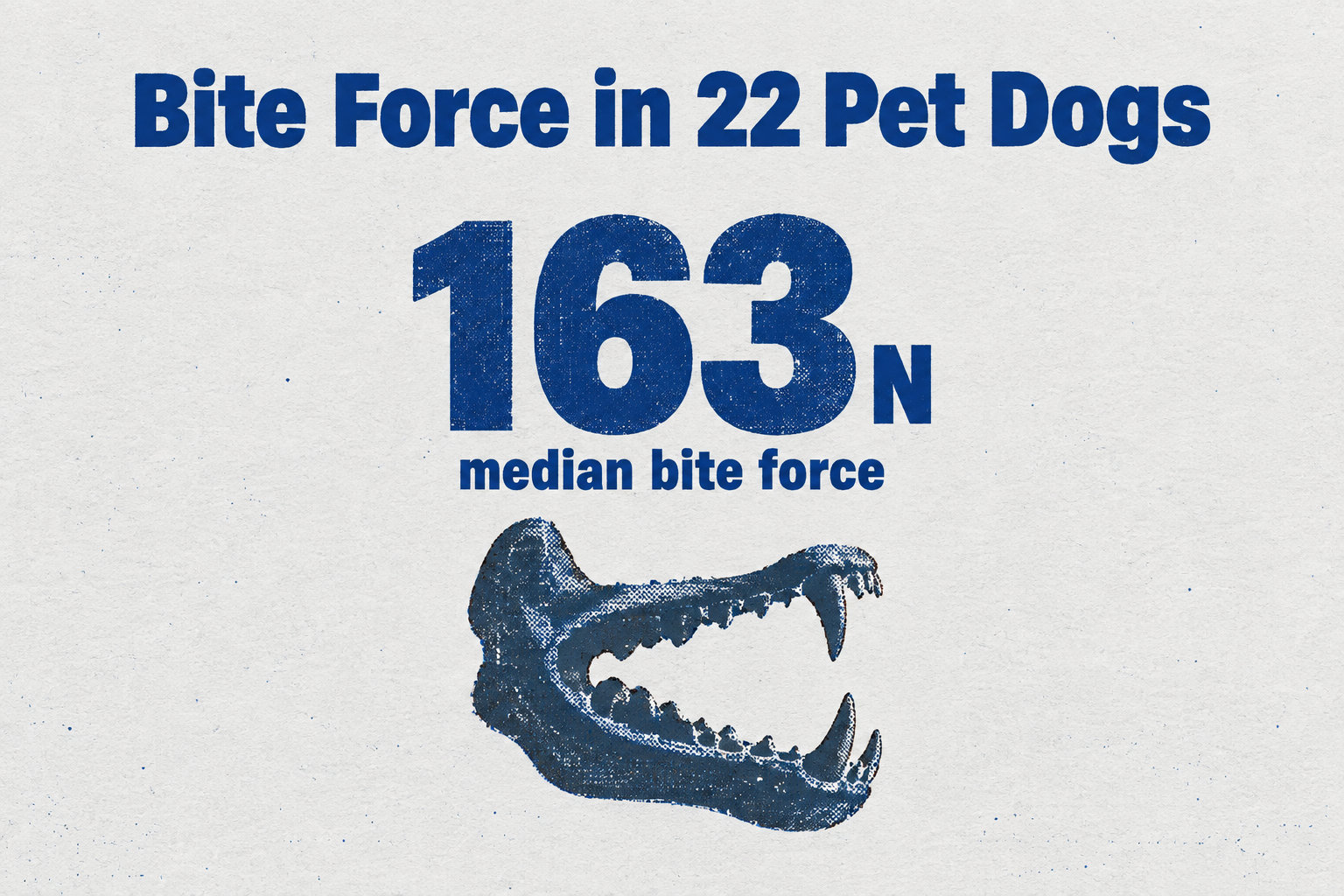
A study of 22 pet dogs revealed wide variation, even within a small mixed group. Their weights ranged from 7 to 55 kilograms.
In the study, bite force ranged from 13 to 1,394 N.
The average was 256 N, and the median was 163 N.
The same dog did not produce the same force every time. Willingness to chew, engagement with the sensor, bite position and temperament all changed the result.
Bite force generally rose with body weight. But the link did not produce a clean ranking of breeds. Larger dogs tended to bite harder. Skull shape and tooth position also mattered.
Anaesthesia and stimulation set a real limit. They let researchers repeat a controlled test. But they cannot show how hard a conscious dog bites during play, chewing, guarding or a real fight.
What popular rankings show about bite force
The widely repeated figure of 743 PSI for the Kangal is an unverified estimate, not a confirmed record. Live-animal measurements and standard breed comparisons do not establish it as a record.
Bite force is only one part of canine strength. It cannot tell you whether a dog can pull a heavy sled, patrol livestock for hours, carry gear, move quickly or work safely in cold northern conditions.
Working Power Varies Among Heavy Breeds for Pulling and Endurance
Size and build among heavy breeds
The figures cover different measures, including height and weight.
The English Mastiff’s minimum shoulder height is 30 inches for males. For females, it is 27.5 inches.
Its typical weight is 120 to 230 pounds, according to a broad guide.
The English Mastiff appears in breed standards as Mastiff. Its official standard stresses proportion and substance, not a fixed weight.
The Anatolian Shepherd Dog’s minimum shoulder height is at least 29 inches for males. No figure is given for females. Its typical weight runs from 110 to 150 pounds.
Its large, rectangular frame suits livestock guarding. The dog must patrol, deter predators and act when needed, not pull steadily for hours.
The Saint Bernard’s minimum shoulder height is 27.5 inches for males and 25.5 inches for females. No typical weight is stated for the breed.
Its big, powerful frame fits its mountain rescue history. Still, height and weight alone do not prove more bite force or pulling ability than another heavy breed.
A large frame gives a dog more potential for raw force. But excess weight can reduce efficiency and add strain. A working build depends on sound joints, strong feet, good movement and enough stamina for the task.
Pulling power and sled endurance
The Alaskan Malamute standard gives desirable freighting weights of 85 pounds for males and 75 pounds for females. Function, proportion, movement and other working qualities matter more than hitting a set size.
The FCI separates three sled-dog qualities. Endurance means long stretches of work. Polar ability means handling snow and sub-zero cold. Power means pulling a load. Speed is treated as its own quality, especially for the Siberian Husky.
The five polar sled-dog breeds named in the FCI rules are the Alaskan Malamute, Canadian Eskimo Dog, Greenland Dog, Samoyed and Siberian Husky.
All five must cope with northern conditions. But the rules link load-pulling power most closely to the Alaskan Malamute, Canadian Eskimo Dog and Greenland Dog.
The Canadian Kennel Club describes three of these breeds differently. The Alaskan Malamute is a powerful freighting dog. The Canadian Eskimo Dog is a strong hunting, sled and pack dog of the Arctic. The Siberian Husky is lighter and faster, built for moderate loads over long distances.
Sled work also depends on terrain and weather.
Snow, ice, sub-zero temperatures, harness fit, team position and load distribution all change the effort required. So a result on one trail cannot stand in for every kind of canine strength.
A rescue dog may need stamina, sure footing, cold tolerance, swimming ability or the power to cross hard ground. Saint Bernard mountain rescue and Newfoundland water work show that the job can matter more than a breed’s headline size.
Before you choose a dog for heavy work, match the breed to the task rather than to a single strength figure. Ask what was measured, how it was tested, and whether the result covers pulling, endurance or guarding. A lone PSI figure rarely answers those questions.
Frequently asked questions
Can you safely train a dog to become stronger?
Yes. Healthy dogs can build muscular strength, power and endurance through gradual, task-specific conditioning.
Start at an easy level and stop at any sign of pain or fatigue. Consult your veterinarian before demanding pulling, jumping or resistance work.
Is weight pulling suitable for every dog?
No. Weight pulling strains joints, muscles, paws and the heart and lungs, so many strong dogs are poor candidates.
Wait until the dog is fully grown and sound, then build up gradually with equipment that spreads force safely.
Does cold weather make a strong dog better at sled work?
Cold tolerance helps, but it does not replace training, sound movement or sled-dog structure.
Harness fit, load, distance and steady pace all affect results, so a cold-climate dog still needs conditioning.