
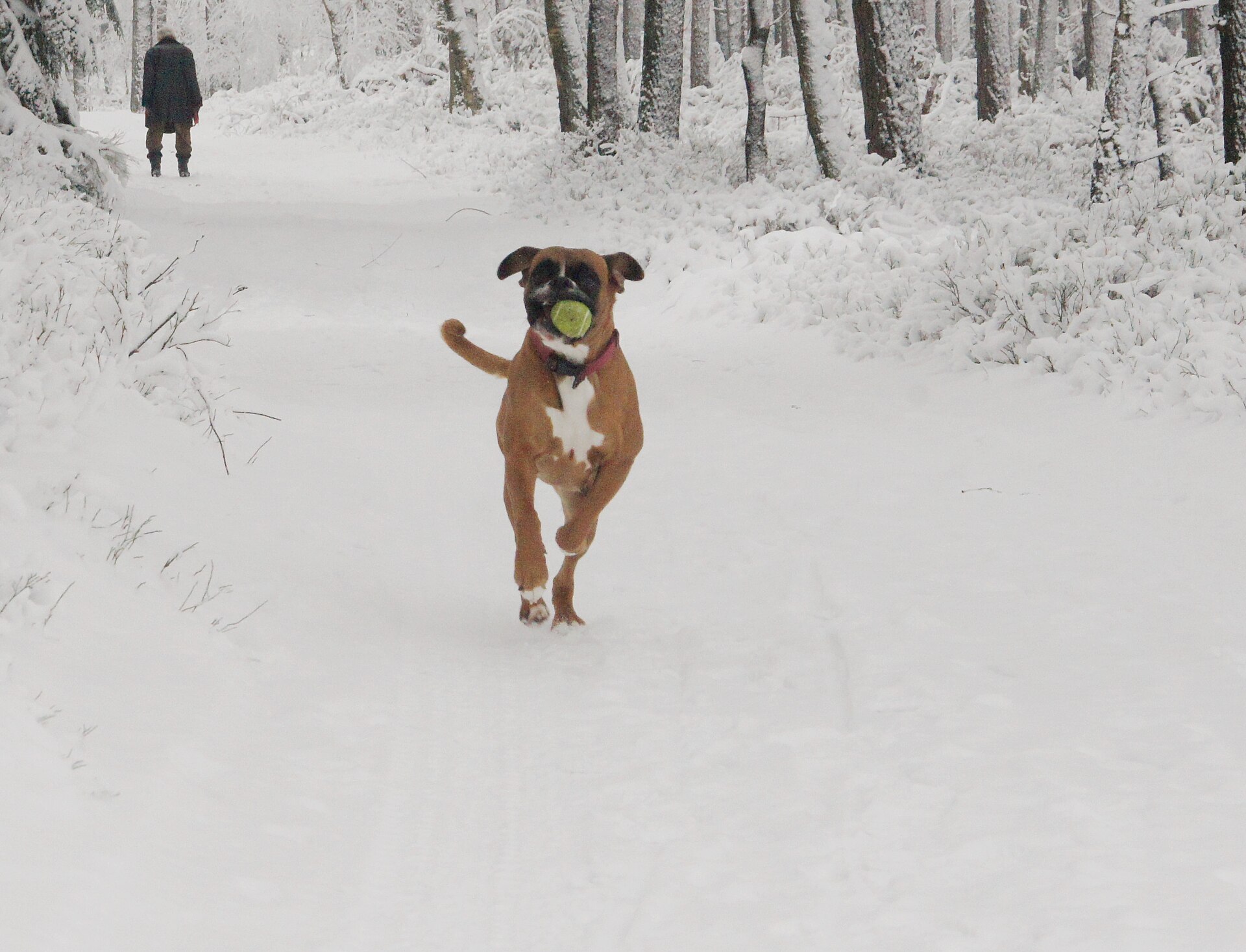
Yes, most dogs can walk in snow without shoes. Their pads already work as built-in soles. The real limits are time, temperature, ice and salt. This guide shows you how to judge each one.
Do dogs need shoes in snow?
In most cases, no. A dog’s foot already has a kind of shoe built in. The pads are hard and leathery. They protect the softer skin around them and the delicate structures underneath.
One vet argues that boots are unnecessary in most cases, as long as you wash and dry the paws after every walk. She also points out that boots cause some dogs real distress. Dogs are not used to wearing shoes the way people are. Boots are also easy to lose on a snowy trail.
Opinion on this is split. Some owners say dogs never need boots. Others say dogs always need them once temperatures fall. They decide case by case.
That middle view is the useful one. Ask three questions before you reach for boots:
- How cold is it, and how long will you be out?
- What is on the ground: clean snow, ice or salted pavement?
- How is your dog’s coat and paw condition?
The sections below take these in turn.
How long and how cold is too much for bare paws?
There is no single number that fits every dog. Coat, size, age and fitness all change the answer. Still, vets give some rough guides.
One UK veterinary team advises keeping walks to 15 to 20 minutes in harsh cold. The same team treats readings under -4 degrees Celsius as dangerous for every dog, whatever its size or shape. Above that line, you make a judgement call and add precautions.
Some dogs sit higher on the risk scale. These dogs need extra care:
- Older dogs
- Younger dogs
- Small to medium breeds
- Short-haired dogs
Those groups are more likely to suffer frostbite or hypothermia on winter walks.
Here is a simple check. If the air feels uncomfortable to you, it is probably uncomfortable for your dog too. This applies when you are dressed normally. It does not apply when you are wearing a huge pile of layers.
Do not assume your dog is one of them. Watch the individual animal, not the breed label.
What are the early signs of cold paws?
Your dog cannot tell you that a paw hurts. You have to read the signs. Catch them early and you can head home before any damage is done.
Watch for these cues:
- Whining
- Shivering
- Hard or damaged skin on the pads
- Lifting paws off the ground
- Slowing down or refusing to walk on
- Licking or chewing at the feet
Dogs can get frostbite too. Hard skin is one sign vets list. Take it seriously.
Standing still is a risk of its own. When temperatures sit around freezing, snow melts from the heat of a dog’s foot and then sticks again. That causes discomfort. So keep moving. Pause only briefly, and do not let your dog stand around in the cold.
You can also make a walk more active. Circle a lamppost, change direction, or add short bursts of play. A dog that keeps moving stays warmer.
How do you protect paws without boots?
A few simple habits cover most winter walks. None of them need special gear.
- Trim the toe hair. Long fur between the toes grabs snow. Clipped hair gives ice less to cling to.
- Walk in the warmer part of the day. Daytime is gentler on paws than early morning or night.
- Wipe legs, paws and belly after the walk. This removes harmful chemicals before your dog can lick them off.
- Dry the paws well. Moist feet, especially between the toes, can lead to skin disease.
- Stop your dog eating snow or licking ice. These can carry toxic chemicals that may be fatal in certain amounts.
Check the pads after each outing. Look for cracks, redness or soreness. A dog that suddenly goes lame needs a full check of the pads and the rest of the leg. Pads can be cut or pierced by sharp objects, even when they look tough.
You can also build up exposure slowly. Start with short outings and extend them as your dog copes. Short, regular trips beat one long walk after weeks indoors.
Keep up the routine, too. A dog should be walked about as much in winter as in other seasons, which helps prevent weight gain. If you cannot manage the same exercise, one vet suggests trimming food by roughly a tenth and watching the dog’s weight.
What about road salt and grit?
Salted pavements are the biggest paw hazard in towns, and often a bigger one than the snow itself. Grit can irritate the skin between the pads. In some cases it leads to dermatitis. In more extreme cases it can cause chemical burns.
Licking adds a second danger. If salt sticks to the paws and your dog licks it off, the problem moves inside the body. Some salt products can be dangerous for dogs with kidney issues. Any dog on salty pavements should be watched closely.
Anti-freeze is a further concern in most towns and cities. If you walk in remote mountain country or deep woods, you are less likely to meet it. In built-up areas, you should assume it may be there.
Your best habit is simple:
- Rinse or wipe the paws as soon as you get home.
- Dry them thoroughly, including between the toes.
- Do not let your dog lick its feet until they are clean.
If your dog will not tolerate paw washing, that is one of the cases where boots are worth considering.
When do boots actually make sense?
Boots are not wrong. They are a tool for particular jobs. Vets name a few clear cases.
Consider boots if:
- Your dog is slipping on wet ground, ice or snow.
- The pads are becoming chapped and sore.
- The skin of the feet does not tolerate being washed.
- Temperatures are sub-zero, where dogs can get frostbite on their pads simply from contact with road or sidewalk.
- Your dog has long hair and keeps collecting balls of ice between the toes.
The kind of outing matters too. A quick trip outside to relieve themselves needs little. A long game of fetch on ice is different. A dog that skids to a halt, runs and repeats will wear its pads down. That dog may need rugged boots. It may need a coat as well.
If you do use boots, take it slowly. Dogs are not used to them, so introduce them indoors first. Make sure they fit and stay on. Take them off when you get home and check the paws underneath.
Coats are a separate question. A dog without a naturally waterproof coat may need one. Here is a quick test. Get your dog wet, then feel down through the fur to the skin. If the deeper fur and skin are dry and warm, the coat is doing its job. If they are wet or cold, add an outer layer.
Frequently asked questions
Is it okay for dogs to walk on snow without shoes?
Yes, for most dogs and most walks. The pads act as natural soles. Keep the walk short in harsh cold, and wash and dry the paws afterwards.
How long can a dog walk in snow?
One UK veterinary team suggests limiting walks to 15 to 20 minutes in harsh cold. Small, old, young and short-haired dogs tire and chill faster. Head home if your dog shivers, whines or lifts its paws.
How cold is too cold for a dog’s paws?
The same vet team calls anything under -4 degrees Celsius dangerous for all dogs. Above that, use your judgement. If it feels too cold for you, it probably is for your dog.
Do I need to wash my dog’s paws after a snowy walk?
Yes. Wipe or rinse them to remove salt, grit and chemicals before your dog licks them off. Then dry them well, because damp skin between the toes can lead to skin disease.
Related reading
- Winter Hiking with a Dog: Cold Tolerance by Coat, Ice Balls and Frostbite
- Paws on Rock, Snow and Road Salt: Pad Care for the Trail Dog
Sources
- Can you walk your dog when it is freezing cold and in the … (avenuesvets.co.uk, accessed 2026-11-09)
- Vet issues warning about dogs wearing outdoor boots in the … (companionlife.co.uk, accessed 2026-11-09)
Photo: Dog walking in the snow (5824007034), by rob Stoeltje from loenen, netherlands, CC BY 2.0 (Wikimedia Commons)