
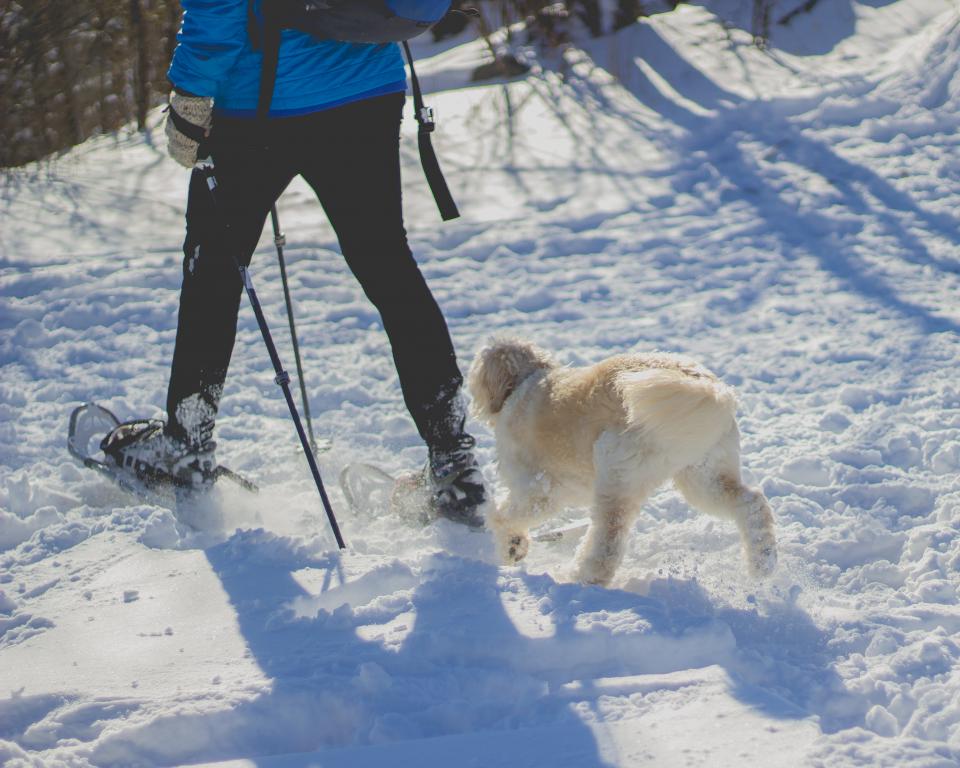
Snowshoeing with a dog is simple to start. You need a good harness, a leash you can wear hands-free, and a fit dog. Begin on flat, easy ground and keep your dog off groomed ski tracks.
Is snowshoeing a good winter activity for your dog?
Yes, for the right dog. A snowy trail gives an active dog a change from summer routes. It also gives you a shared task. You work, your dog works, and both of you end up tired in a good way.
One guide who leads dog outings in the Pyrenees describes the feeling in a single word: liberation. You can see it in a wagging tail and bright eyes. The dog treats the outing as its own.
The effort matters, though. Every step costs more energy. Your dog needs a minimum level of fitness before you start.
Think of it as a new sport, not a stroll. Build up slowly. Watch your dog the whole time.
What gear do you and your dog need?
The list is short. You can start with very little.
For you:
- Snowshoes that fit your boots
- Warm clothing you can layer
- Waterproof boots
- Gloves
- A hands-free leash system
For your dog:
- A well-fitting harness with a clip on the back
- A leash that attaches to your waist belt
- Paw protection, such as booties
- A bright colour if hunting happens nearby
Choose the harness first
A harness with a back clip suits this activity. It lets you attach the leash without pulling on the neck. It also spreads any tug across the body.
Think about visibility
White snow hides many dogs. A bright harness helps you see your dog at a distance. In areas where hunting takes place, bright orange is a smart choice. It is easier for other people to spot as well.
How do you handle the leash while wearing snowshoes?
Gloves and poles make a hand-held leash awkward. Snowshoes make balance harder. A sudden pull can put you on the ground.
The fix is to free your hands. Three options work well.
- Tie the leash around your waist until you reach a place where you can unclip.
- Use a hip belt with a carabiner and a leash that clips to it.
- Use a skijoring-style rig: a hip belt joined to a bungee-like tow line.
The bungee line is the best of the three. It absorbs sudden pulls. That matters when your dog spots a squirrel while you stand on snowshoes. It also lets your dog move ahead of you while your hands stay on the poles.
Wildlife is a real risk here. One guide recalls a dog that chased a small deer while tied to its owner. The owner ended up with snowshoes in the air and a trip through the snow. Nobody was hurt, but the story shows why a secure, elastic connection beats a tight, rigid one.
Practise before the trip. Walk a short loop with the rig on. Check that the line does not tangle in your snowshoe frames.
Which dogs float and which sink?
Any sporty dog can try snowshoeing. Some are better built for it than others.
Short-legged dogs have the hardest time. In fresh or soft snow they sink in. They have to jump to move forward. They tire faster and run out of breath sooner.
Fitness matters as much as build. A dog that lives a quiet indoor life is a poor match for deep snow. Walking in snow demands a minimum of conditioning.
Use this quick check before you go:
- Does your dog walk or run most days?
- Do the legs clear the snow depth where you plan to go?
- Does your dog still seem happy after a longer outing?
If the answer to the first two is no, pick shallow, packed snow. Keep the outing short. A compacted path is far easier on a small dog than untouched powder.
Your own fitness counts too. Breaking trail through deep snow is hard work for you as well.
How do you protect your dog’s paws in snow?
Paws take a beating in winter. Snow packs between the pads. It can form small icicles in the fur.
Each step then rubs those lumps against the skin. That can scratch the pads and cause painful sores.
Booties help. Introduce them at home first. Let your dog wear them for a few minutes indoors, then on a short walk.
Check the paws during every break:
- Look between the pads for ice balls.
- Pick out packed snow gently.
- Look for redness, cracks or small cuts.
If your dog limps or licks a paw, stop. Remove ice, check the pad and head back if needed. The site’s other guides on paw care and winter hiking cover this in more depth.
Where can you go, and how do you behave around skiers?
Start easy. Flat ground and short loops tell you how your dog feels about snowshoes. A frozen lake can be a good beginner spot, but check with locals that the ice is safe. Watch for thin ice near inlets and keep your dog close there.
Short loops rated easy make a good test run. They let you judge your dog’s comfort before you commit to a longer route. They still offer good views.
Rules differ from place to place. Some cross-country ski centres allow dogs on designated trails only. Each one sets its own dog policy. Call ahead and ask which trails allow dogs on the day you plan to visit.
Some areas also need a parking permit in winter. Check this before you leave home.
Stay off groomed ski tracks
Groomed tracks are set for skiers. Trampling them makes skiing difficult. It also creates friction between trail users.
Your dog’s paws can damage the grooming as much as your snowshoes. Keep your dog off the groomed lanes too. Walk beside the track, not in it.
Plan for the return
Do not use all your energy on the way out. If the route returns uphill, the last stretch will be the hardest. Turn around before you and your dog are tired.
Frequently asked questions
Can any dog go snowshoeing?
Any sporty dog can try it. Short-legged dogs struggle in fresh, soft snow because they sink and tire faster. A dog with little regular exercise should not be taken into deep snow.
What is the best way to hold the leash?
Use a hands-free setup. A hip belt with a bungee-style tow line lets your dog move ahead while you keep hold of your poles. The bungee absorbs sudden pulls, which helps you stay upright.
Should my dog wear boots in the snow?
Booties are a good idea for dogs with sensitive pads or dogs new to snow. They stop ice from lodging between the pads and scratching the skin. Let your dog get used to them at home first.
Can my dog walk on groomed ski tracks?
No. Keep your dog off them, just as you keep your snowshoes off. Paws can damage the grooming and make skiing harder. Walk beside the track and follow each area’s dog rules.
Related reading
- How Far Can a Dog Hike? Distance by Age, Breed Type and Fitness
- Paws on Rock, Snow and Road Salt: Pad Care for the Trail Dog
Sources
- Cani-snowshoeing: a winter sport to share with your dog (emmenetonchien.com, accessed 2026-11-09)
Photo: People Man, by Bonnie Kittle, CC0 1.0 (Stocksnap, via Openverse)