
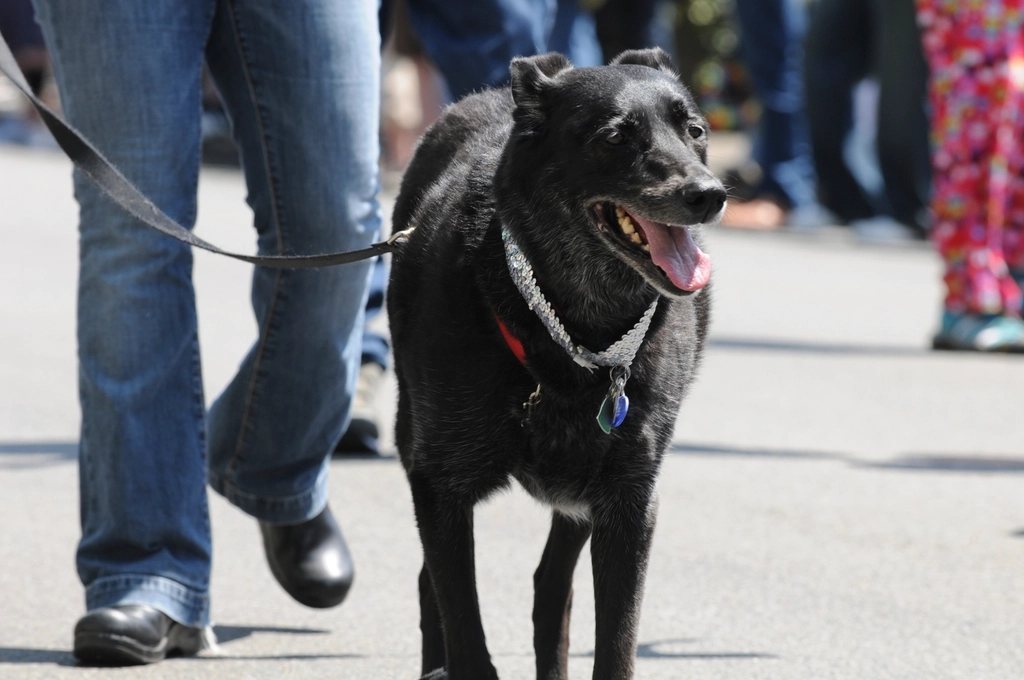
Dogs do not sweat the way we do. A few sweat glands in the paw pads help a little, but almost all of a dog’s cooling comes from panting, which moves air over the wet surfaces of the tongue, mouth and upper airway. That system works well in a shaded forest at 15 C and fails quickly on an exposed ridge at 30 C. Heat stroke is one of the few trail emergencies that can kill a healthy dog in under an hour, and it is almost entirely preventable. Here is how we plan warm-weather walks and what we watch for once we are out.
Why 25 C is our line
There is no single safe temperature, because humidity, sun, wind and the dog itself all change the equation. Still, we find it useful to work with thresholds. Below 20 C, most healthy dogs can walk normally with water and rest. Between 20 and 25 C we shorten the outing, pick shaded routes and go early or late. Above 25 C we generally do not take a dog on a hike at all, and at 28 C or more we consider it unsafe for any dog that is not a fit, lean, short-coated adult on a shaded route with plenty of water. Humidity pushes those numbers down, because panting relies on evaporation and wet air evaporates less.
Some dogs move the line lower. Flat-faced breeds, dogs with thick double coats, overweight dogs, seniors, puppies and dogs with heart or airway conditions all overheat sooner. Black or dark-coated dogs absorb more sun. A 20 C day in full sun can be too much for a bulldog type, while a lean pointer type may be fine at 24 C on a river trail. The threshold is a starting point, not a permission slip.
The pavement test
Ground temperature is a separate problem from air temperature. Dark asphalt in direct sun can reach 50 to 60 C on a 30 C day, and sun-baked rock is not much cooler. The test is simple: place the back of your hand flat on the surface and hold it there for seven seconds. If you cannot manage seven seconds comfortably, the ground will burn the pads. We do this at the trailhead, on any long stretch of road or slab, and again at midday when the sun has been on the rock for hours. Grass, shaded soil and forest litter are almost always fine. Burned pads show as blistered, reddened or peeling skin, and a dog limping after a hot road section should be checked at once.
Reading the panting
Panting is normal; the pattern is what matters. A dog that is warm but coping pants fast and shallow with the mouth open and the tongue moderately out, and the panting slows within a few minutes of resting in shade. A dog that is in trouble pants hard and does not settle at rest, the tongue becomes wide and flat and hangs far out, and the gums turn a deep brick red. The dog may start to drool thick saliva, look anxious, and seek shade or dig into cool earth. This is the point to stop, not to push to the summit.
A quick set of signs we watch for on any warm day:
- Heavy panting that does not ease after five minutes in the shade.
- Bright red or purple gums and a tongue that is wide, flat and dark.
- Thick, sticky drool, or a dog that has stopped drooling entirely.
- Staggering, glazed eyes, a wobbling back end, or collapse.
- Vomiting or diarrhoea, sometimes with blood, during or after the walk.
What heat stroke actually is
A dog’s normal body temperature sits between roughly 38 and 39.2 C. Heat exhaustion begins as the temperature climbs past 40 C; at 41 C and above, the dog is in heat stroke, and proteins and cells in the gut, kidneys, brain and blood start to be damaged. That is why heat stroke is not simply a matter of feeling unwell: dogs that appear to recover on the trail can develop kidney failure or clotting problems a day or two later. Any dog that has shown the later signs above, particularly staggering, collapse or bloody diarrhoea, needs a veterinary examination the same day even if it seems to bounce back.
Cooling a dog in the field
The first step is to stop moving and get the dog out of the sun. Then cool it with water: pour or sponge cool, not icy, water over the belly, groin, armpits and paws, the areas where blood runs close to the skin. If there is a stream or lake, let the dog stand or lie in it. Wet the ground the dog is lying on. Do not wrap the dog in a wet towel and leave it, because the towel warms up and traps heat; keep replacing water and let the air work. Offer small amounts of water to drink but never force it, and do not try to make the dog drink if it cannot swallow properly. Once the dog is cooler and steadier, carry it or walk it very slowly back to the car, and keep the car ventilated while you drive to a clinic.
Ice and ice-cold water were once discouraged; current advice for otherwise healthy dogs is that cold water is fine and speed of cooling matters most. What we avoid is the combination of cold water and no airflow.
Planning a warm-weather walk
Most of the work happens before the car leaves. We check the forecast for the highest temperature of the day, not the morning figure, and we start early enough to be back at the trailhead before the heat peaks. Routes with tree cover, north-facing slopes and running water are worth a longer drive. We carry a minimum of one litre of water for a medium dog on a half-day walk, more if there is no water on the route, and a collapsible bowl so the dog can drink every twenty to thirty minutes. Rest stops are in the shade and long enough for the panting to settle. If we arrive at the trailhead and the pavement test fails, or the dog is already panting at the car, we change the plan. A dog will never tell us it is too hot; it will just keep going, which is exactly why we have to decide for it.
Read next: Snowshoeing With a Dog: Gear, Fitness and Trail Manners